More Information About Backlit Film
Common Classifications of Backlit Film
· By Transparency:
· Fully Transparent Film: Completely transparent; the image appears dark without backlighting but becomes vibrant when illuminated, making it ideal for applications heavily reliant on a light source.
· Semi-transparent Film (Opaque/Milky White Film): Semi-transparent (milky white); the image is visible even without backlighting and becomes more vibrant when illuminated, making it suitable for scenarios where the graphic must remain visible during the day or when the light is turned off.
· By Printing Process:
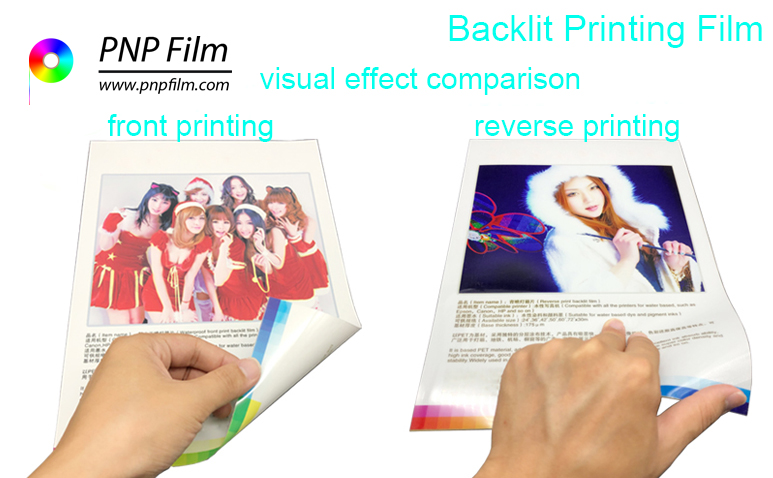
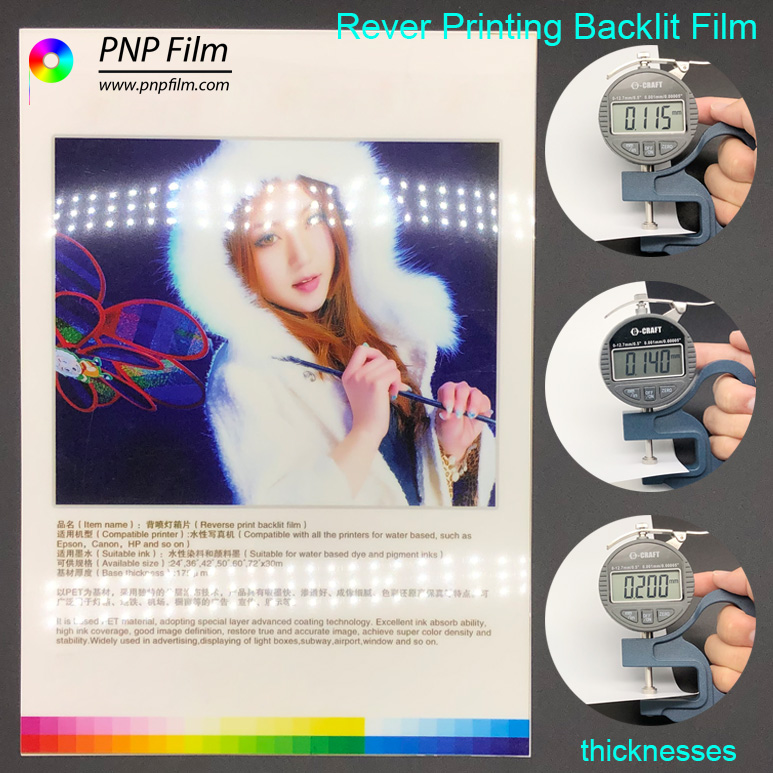
· Reverse printing Lightbox Film: The image is printed on the back of the base film and viewed via diffuse transmission through a white light-blocking layer; suitable for backlit lightboxes, with the image protected from damage.
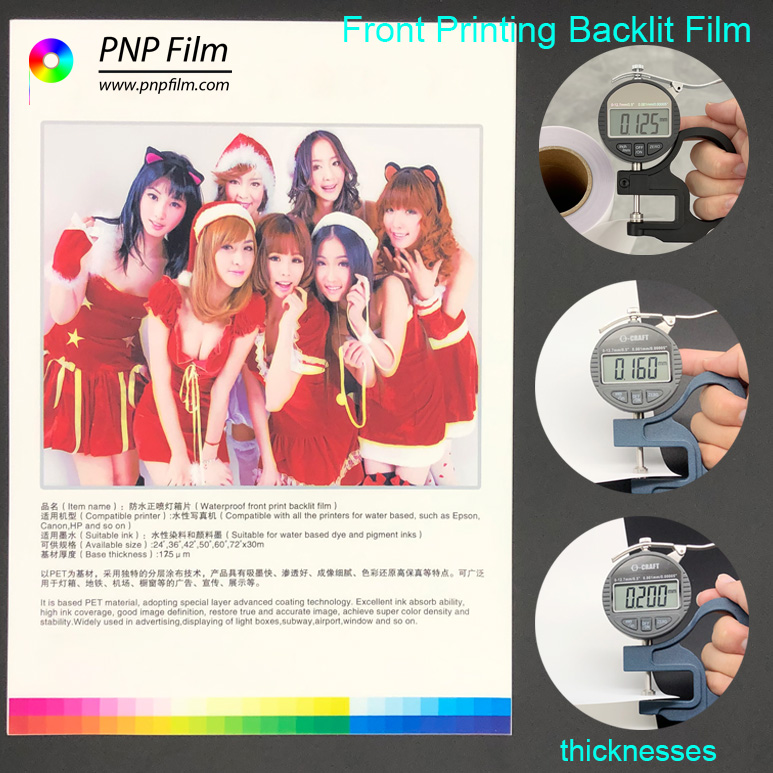
· Front printing Lightbox Film: The image is printed on the front of the base film, offering vibrant colors and rich tonal depth; viewable from both sides. Post-printing lamination is typically applied to enhance color saturation and water resistance.
 What are the Key Features of Backlit Film?
· Uniform Light Transmission: Produces a clean, bright, and smooth visual effect when illuminated, effectively masking the outlines of the light source (e.g., fluorescent tubes).
· High Image Quality: Offers excellent color reproduction, rich detail, and strong visual impact.
· Material Stability: Certain materials (like PET) offer high rigidity and resistance to curling, along with properties such as water resistance, UV resistance, and tolerance to temperature extremes, ensuring a long service life.
FAQ of Backlit Film
Q: What is the MOQ for backlit film?
A: The minimum order quantity is 5,000 square meters, about 100~200 rolls;
Q: What is the popular size for a backlit film?
A: 36"/42"/50"*30m/50m, paper core of 2".
Q: What is the difference between dye-based ink and pigment-based ink?
A: · Dye-based inks feature small molecular particles, vibrant colors, and a wide color gamut; however, they have poor lightfastness and are prone to fading. They are primarily used in indoor high-resolution printers. Pigment-based inks feature large molecular particles, excellent lightfastness, and resistance to fading; however, their colors are relatively muted. They are primarily used in outdoor large-format printers or applications requiring high weather resistance.
Q: How do I choose the right ink for my lightbox film?
A: When selecting ink for lightbox film (such as back-print or front-print film), consider factors such as the lightbox's placement environment (indoor/outdoor), the film material (translucent/semi-translucent), and the type of printing equipment used.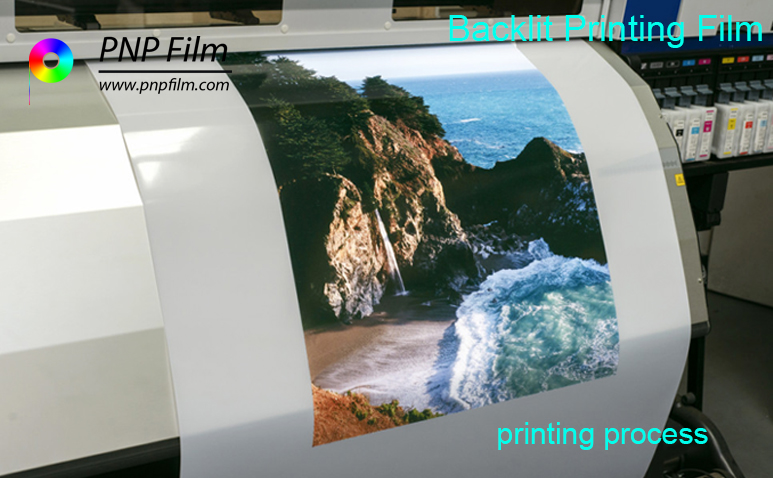
About Backlit Film at PNP Film
To Be the Most Professional and Reliable Partner of Backlit Film
Driven by clients' demand, powered by the R&D department, and supported by the production department, PNP Film has developed many types of backlit film, which enable clients to find the most suitable product for their specific requirements at PNP Film. Below are some popular types of backlit film, and clients are welcome to send us any specific demand for product innovation.
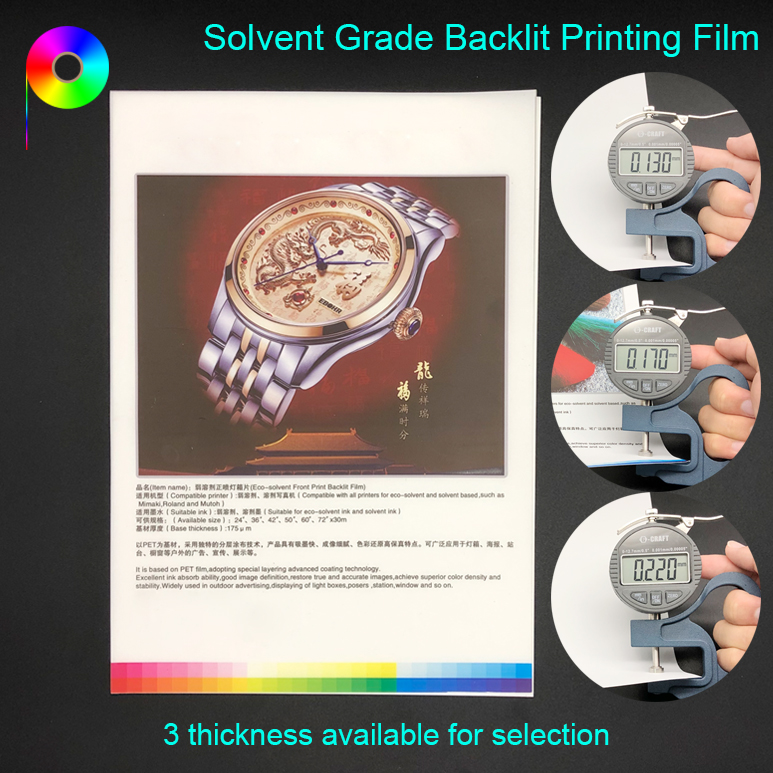
| front printing backlit film | reverse printing backlit film | solvent printing backlit film |
| direct printing; 125/160/200micron thickness; |
reverse printing; 115/140/200micron thickness; |
direct printing with solvent ink; 130/170/220micron thickness; |
 |
 |
 |
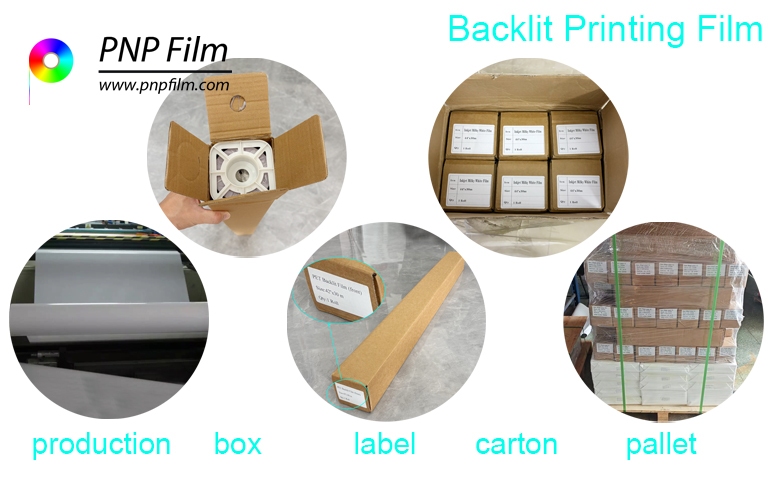
Production and Packing Details for Backlit Film in PNP Film
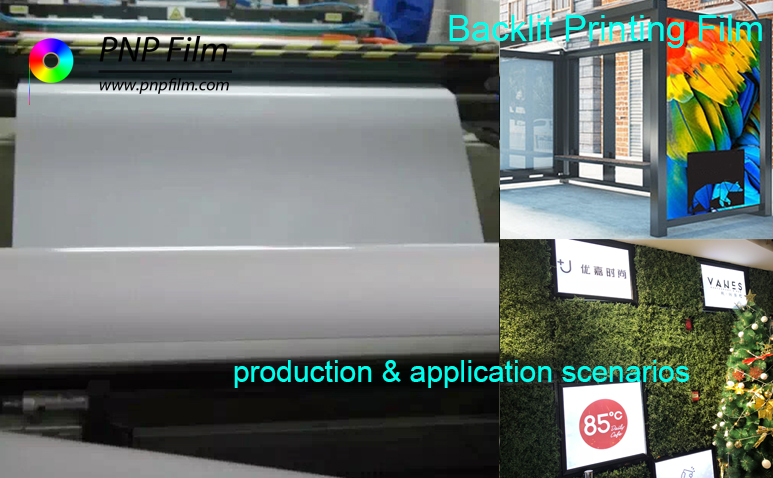
Slitting and rewinding process, packaging, labeling with product information, carton loading onto a pallet;
Contact PNP Film to Communicate about Backlit Film now
Should any question or interest in backlit film, please send us an inquiry or contact us directly.