
250micron 10mil SRA3 Size Both Sides Matte Laser Printing Coated Synthetic Paper
Product Details
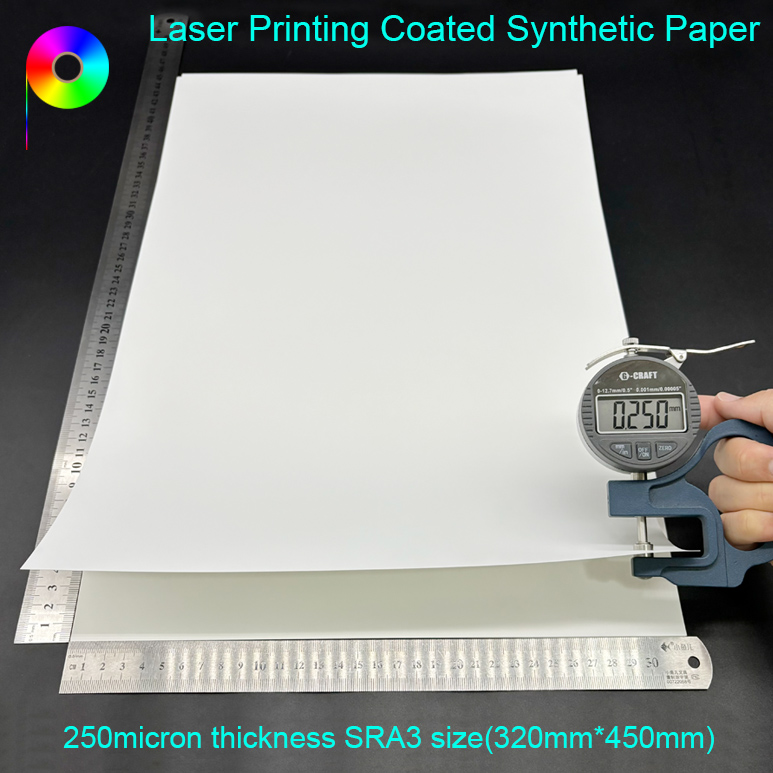
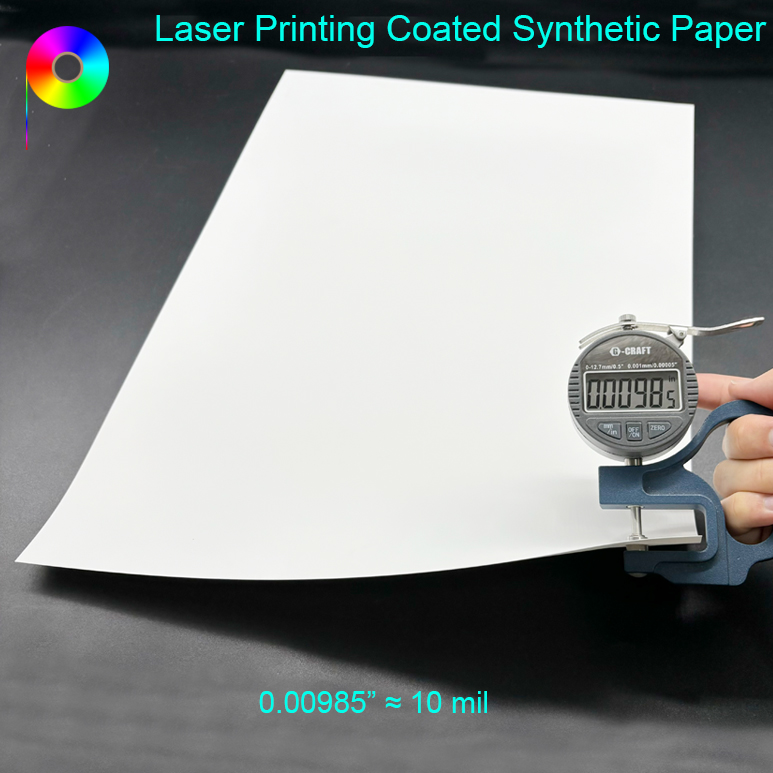
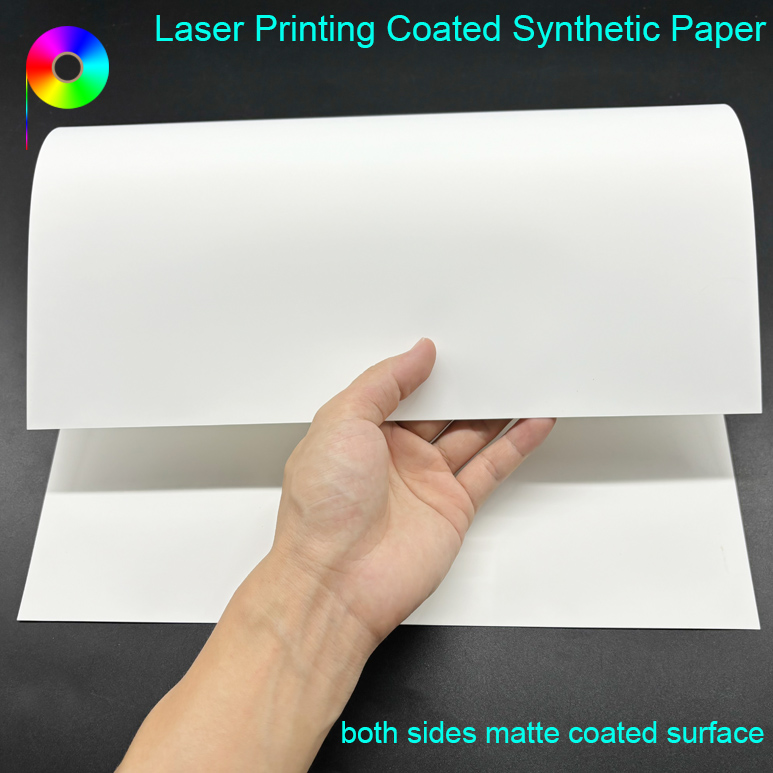
Laser printing 250 micron(equal to 10mil) synthetic paper takes 220micron PP synthetic paper laminated PET film as the base film, and then coats it with 15 micron of laser printing coating on each side, the final total thickness is 250micron.
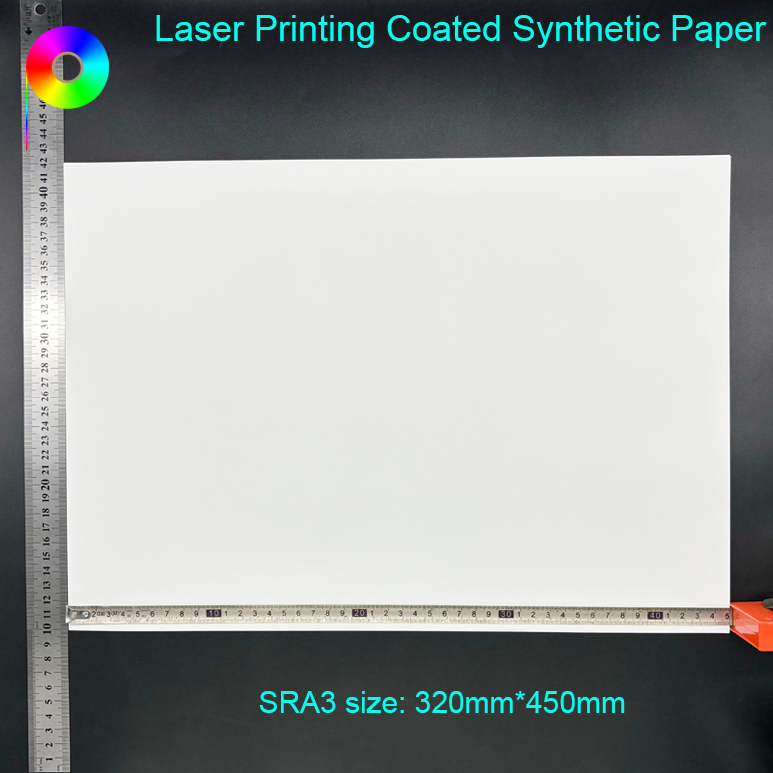
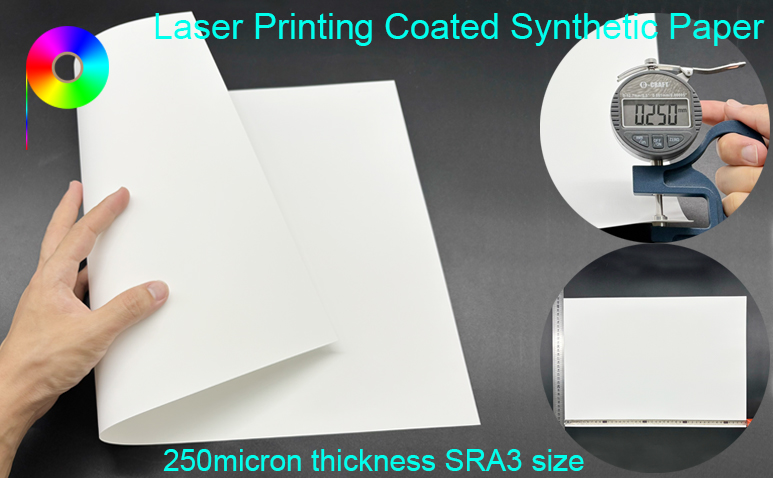 SRA3 stands for supplementary raw format A3. The size of SRA3 is 450mm x 320mm, which is a slight step up from an A3 sheet, which measures 420mm x 297mm.
Like with your home printer, commercial printing presses cannot print right up to the edges of the paper. Along the edges of the paper, a blank space is left where the toner has not been able to reach. Let's say we want to print an A3 certificate. If we started with an A3 sheet of paper, the edges around the certificate would be unprintable, causing parts of the design to be lost.
To tackle this issue, SRA papers are used in print. As SRA papers are bigger in overall size (compared to A papers), the additional area is used almost like a buffer against the nonprintable area. The edges of the SRA3 paper remain blank, without creeping into the printed designs within.
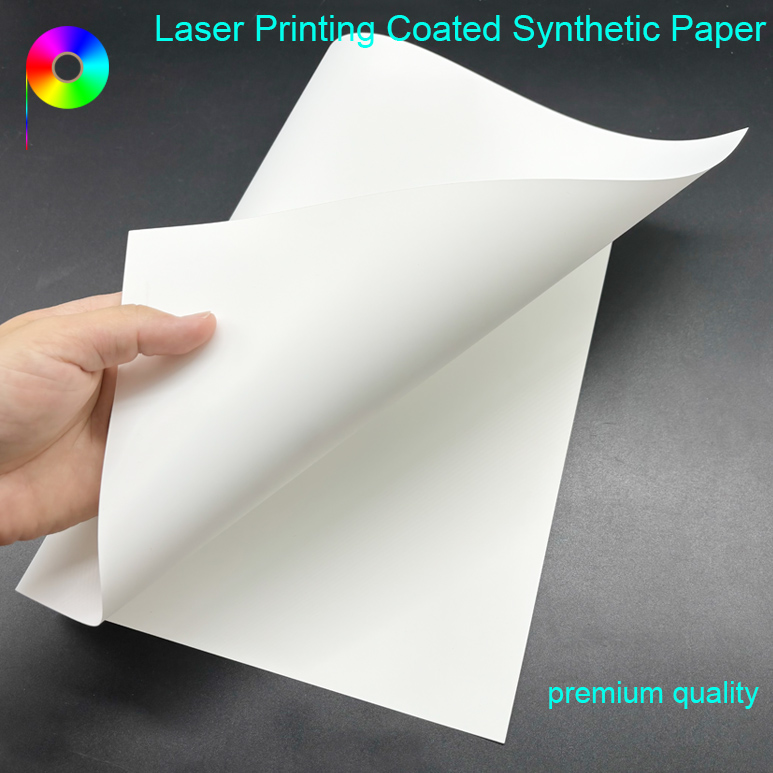
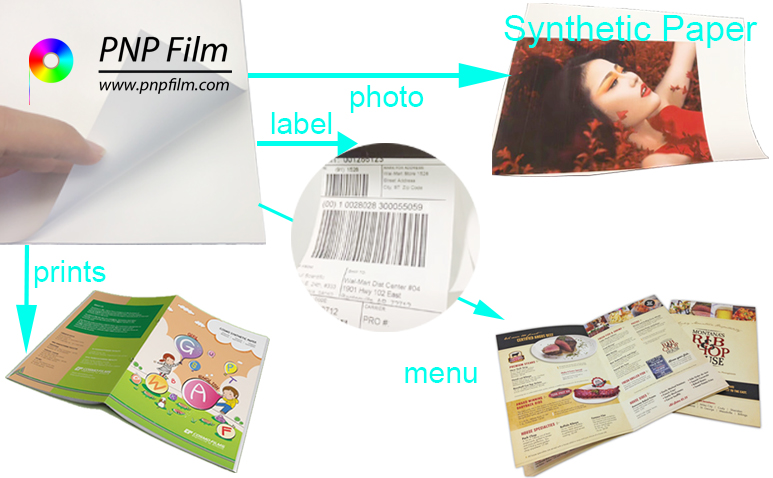
The coated synthetic paper has extremely high tensile strength, extremely high tear strength, good insulation properties, optical properties, and excellent wet strength. It is widely used in high-end artworks, maps, picture albums, high-end books, periodicals, etc.
| 10mil thickness |
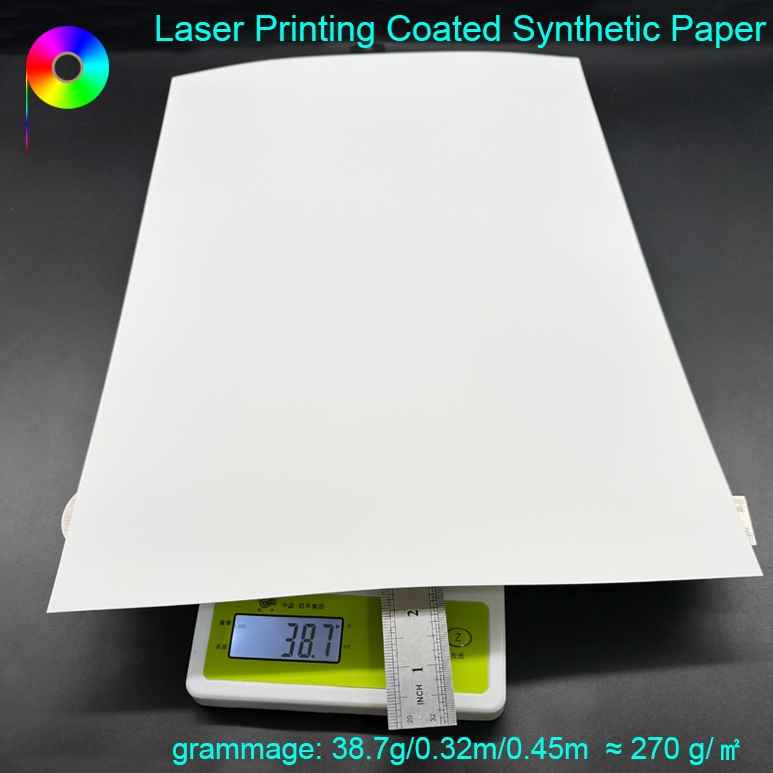
270GSM grammage | SRA3 size 32*45cm |
both sides coated | premium quality |
 |
 |
 |
 |
 |
Click HERE to view the synthetic paper project we have undertaken across various countries.
Click HERE to view the synthetic paper videos, such as production, packing, and application.
What Is Synthetic Paper?
Synthetic paper is a novel composite material manufactured primarily from synthetic resins (such as polypropylene [PP], polyethylene [PE], and polyester [PET]) and inorganic fillers (such as calcium carbonate) through processes like extrusion, stretching, and calendering.
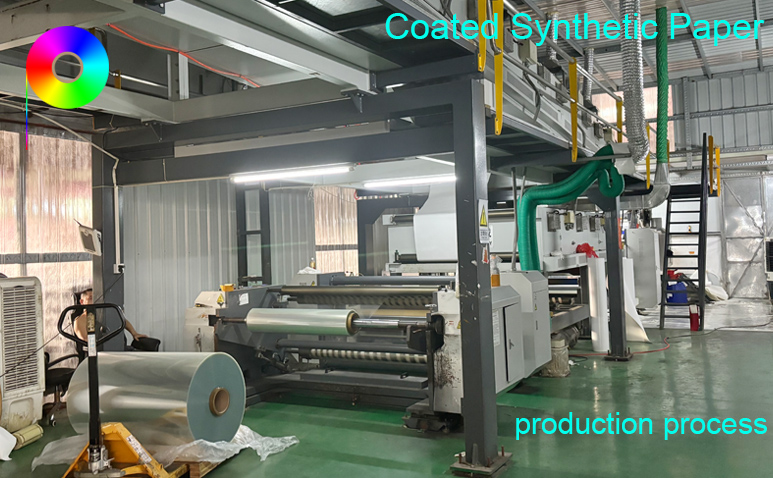
It combines the appearance of traditional paper (high whiteness, smooth surface) with the superior properties of plastics (water resistance, tear resistance, and chemical resistance), serving as a significant alternative to traditional plant-fiber paper.
Where Is Synthetic Paper Used?
- · Packaging & Printing:
- Food, pharmaceutical, and industrial product packaging; shopping bags; boxes, etc. (can replace traditional composite paper due to waterproof and oil-resistant properties).
- · Labels & Specialty Paper:
- Logistics labels, anti-counterfeiting labels, in-mold labels, thermal receipts, express shipping labels, etc. (suitable for harsh environments).
- · Cultural & Advertising Materials:
- Outdoor posters, large-format prints, maps (military/nautical charts), brochures, high-end books/periodicals, business cards, menus, racing bibs/race numbers, etc. (widely used due to durability, water resistance, and excellent color reproduction).
For more information, such as synthetic paper classifications, synthetic paper features/FAQs/production/packing, welcome to click HERE.